
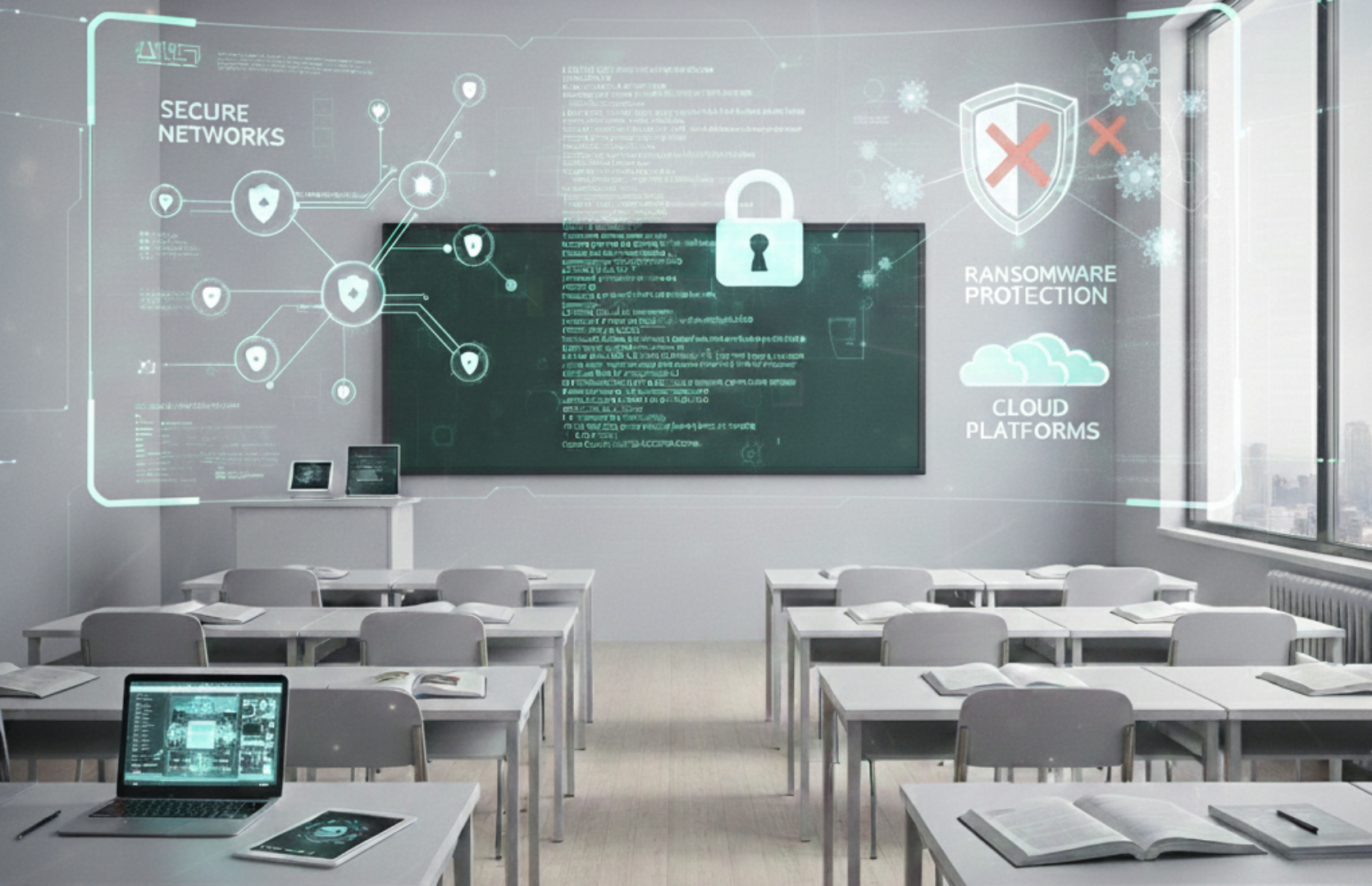
Cyber security has become a core operational and safeguarding issue across the education sector. The 2025 UK GOV Cyber Security Breaches Survey makes this clear, revealing that education remains highly targeted. At a time when cloud platforms, digital learning and online communication underpin day-to-day operations, threat actors are exploiting persistent gaps in infrastructure, training and governance.
Trend 1: Breaches Are Still Going Undetected and Underreported
One of the most concerning trends in the survey is not simply the scale of attacks, but the lack of visibility around them. Many education institutions struggle to identify when a breach has occurred due to limited monitoring, incident reporting and threat detection. Without logging and escalation processes in place, breaches can persist unnoticed, significantly increasing their impact, duration and recovery costs.
Trend 2: Legacy Networks and Wi-Fi Infrastructure Increase Exposure
The expansion of digital learning has for many outpaced the investment required to modernise supporting infrastructure. Ageing wireless networks, poorly segmented environments and legacy systems create predictable vulnerabilities. Unsecured guest networks, unmanaged student devices, IoT equipment and cloud platforms further expand the attack surface. For ransomware groups, these conditions represent a low-effort, high-reward opportunity.
Trend 3: Cyber Spend Remains Reactive, Not Strategic
A recurring theme is cyber investments following an incident rather than anticipating one. Schools, colleges and universities may be forced into emergency budget decisions after outages, ransomware events or data exposure. Until cyber risk is addressed as part of safeguarding, continuity and governance, funding gaps will persist and institutions will remain vulnerable.
Trend 4: People Continue to Be the Weakest Link
Phishing and impersonation attacks remain the most common entry points. Yet cyber awareness and security culture vary widely across the sector. With academic, administrative and support staff handling sensitive data and relying heavily on email, human error offers attackers a reliable route in. Students often bring shared or unmanaged devices, introducing additional complexity and risk.
Trend 5: Cyber Security Is a Safeguarding and Trust Issue
Cyber resilience is increasingly intertwined with safeguarding responsibilities across education. When safeguarding systems, behaviour monitoring tools or any sensitive data is compromised, the consequences are not just technical, they affect regulatory compliance, student welfare and institutional trust. Protecting data is part of protecting students, and cyber incidents have direct implications for governance and parental confidence.
What Needs to Change
Based on the insights, three priorities stand out:
- Modernise network and Wi-Fi infrastructure
- Improve monitoring, detection and incident response
- Integrate cyber risk into safeguarding and leadership strategy
The education sector doesn’t need to master cyber security overnight, but it does need to recognise that attackers have already adapted. The institutions that thrive will be those that view cyber security as a safeguarding and operational continuity issue, rather than just an IT responsibility.