

You have a firewall and security tools in place. But if an attacker had already gained access to your network, would you know? Cyber attacks aren’t always obvious. Attackers can use stolen credentials or exploit system weaknesses to move through a network undetected, potentially accessing sensitive data or critical systems before anyone notices.The challenge isn’t just preventing attacks, but recognising suspicious activity and responding quickly.
How do attackers get inside a network?
Attackers may exploit vulnerabilities, steal login credentials or use phishing to gain access. Once inside, they may move between systems using legitimate accounts and tools, making their activity harder to spot. The NCSC’s guidance on preventing lateral movement explains how attackers can move through networks while avoiding detection.
Understanding how attacks unfold can also help organisations identify opportunities to intervene. Our guide to the cyber kill chain explains the different stages of an attack and where defences can make a difference.
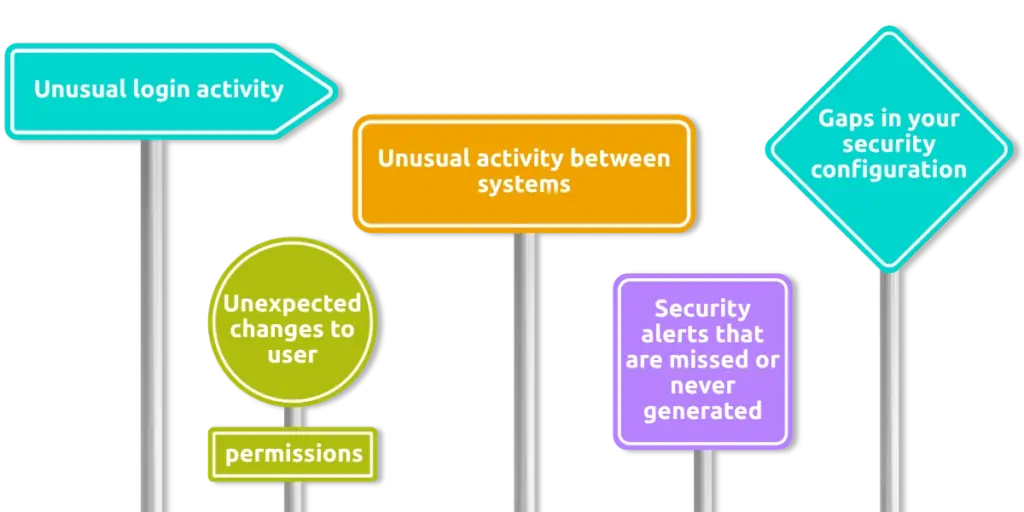
5 warning signs that an attacker could be inside your network
Recognising the early indicators of compromise can help your IT team investigate suspicious activity before it develops into a more serious incident. Not every unusual event indicates a cyber attack. However, patterns of unexpected behaviour deserve investigation, particularly when they involve privileged accounts, sensitive systems or activity that does not match normal business operations.
1. Unusual login activity
Compromised credentials are a common way for attackers to access systems without needing to bypass every security control directly. Warning signs can include repeated failed login attempts, successful logins following suspicious activity, access from unfamiliar locations or devices, and account activity at unexpected times. A successful login does not necessarily mean the person accessing the account is authorised to do so. This is why organisations should monitor authentication events, investigate unusual patterns and apply multi-factor authentication (MFA), particularly to accounts with access to sensitive systems. The NCSC provides further advice on identifying suspicious credential usage.
2. Unexpected changes to user permissions
Attackers who gain access to an account may attempt to increase their privileges or exploit permissions that are already available. An ordinary user account with excessive access can become a significant security risk if compromised. Similarly, an administrator account can provide access to critical systems and sensitive information. Your organisation should monitor changes to account permissions, the creation of unexpected accounts and unusual use of privileged credentials. Regularly reviewing who has access to what is equally important. Employees change roles, external suppliers come and go, and permissions that were once necessary may no longer be appropriate.
3. Unusual activity between systems
Once attackers gain access to one device or account, they may attempt to move laterally through the network to reach other systems. This could involve accessing servers that a user would not normally need, connecting to multiple devices in quick succession or using legitimate administrative tools in unexpected ways. Attackers may deliberately blend into normal network activity by using legitimate tools and systems, making lateral movement more difficult to detect. Learn more about preventing lateral movement.
Monitoring activity across devices, servers and network infrastructure can help identify behaviour that would otherwise go unnoticed. Network segmentation can also help restrict how far an attacker can move if one part of the environment is compromised. Find out how command-and-control activity works and how monitoring can help identify suspicious communications.
4. Security alerts that are missed or never generated
Security tools can generate valuable alerts, but those alerts are only useful if they provide meaningful information and someone or something acts on them. A warning might be missed because it is buried among routine notifications. Alternatively, a detection rule may not be configured correctly, relevant logging may be unavailable, or activity across different systems may not be connected into a clear picture. This creates a visibility problem.
Logs can help organisations understand what happened, assess the impact of an incident and determine whether security controls are working as intended. Organisations should review which events their systems record, whether alerts are configured appropriately and whether suspicious activity can be investigated across their wider IT environment. Simply collecting more data is not the answer. The priority is making sure the right information is available, understood and acted upon.
5. Gaps in your security configuration
Even established security products can leave an organisation exposed if they are not configured and maintained correctly. Firewall rules, access permissions, monitoring settings and network configurations all influence how effectively security controls operate. For example, an overly permissive firewall rule could allow traffic that should be restricted. Poorly controlled administrator access could give a compromised account more privileges than necessary. Missing logs could make it harder to establish how an attacker entered the network or what they accessed.
These issues may not produce an obvious warning until an incident occurs. Regular reviews of security configurations and access controls can help identify weaknesses before attackers exploit them. Syscomm‘s experience supporting organisations through ransomware recovery has reinforced the importance of looking beyond the presence of security tools to understand how effectively they are configured and working together.
When Your Security Tools Don’t Tell the Whole Story
Firewalls, endpoint protection and monitoring tools all play an important role in cyber security, but their effectiveness depends on how well they’re configured and how effectively they work together. When tools operate in isolation, suspicious activity can go unnoticed. Unusual logins, unexpected permission changes and connections between devices may seem harmless individually but could signal a wider breach. Rather than simply adding more products, organisations should focus on improving visibility, addressing configuration gaps and making better use of their existing security tools.
At Syscomm, our experience of more than 220 ransomware recoveries has shown us the importance of identifying these weaknesses before they lead to a serious incident. Find out more about our cyber security services.
Could Your Security Controls Stand Up to a Real Attack?
Compromised credentials, misconfigured controls and gaps in monitoring can all give attackers opportunities to operate undetected. Improving visibility and regularly reviewing security controls can help organisations identify suspicious activity earlier and respond more effectively. The goal is not just to prevent attackers from getting in, but to limit how far they can go and how long they remain undetected.
Read more about the configuration gaps that can leave organisations exposed, even when the right security tools are in place here.
Would you know if an attacker was already inside your network?
Join us for Inside The Next Breach at the Crystal Maze in Manchester on 14 October 2026, where we will explore the threat landscape and what organisations can learn by looking at cyber security from an attacker’s perspective.