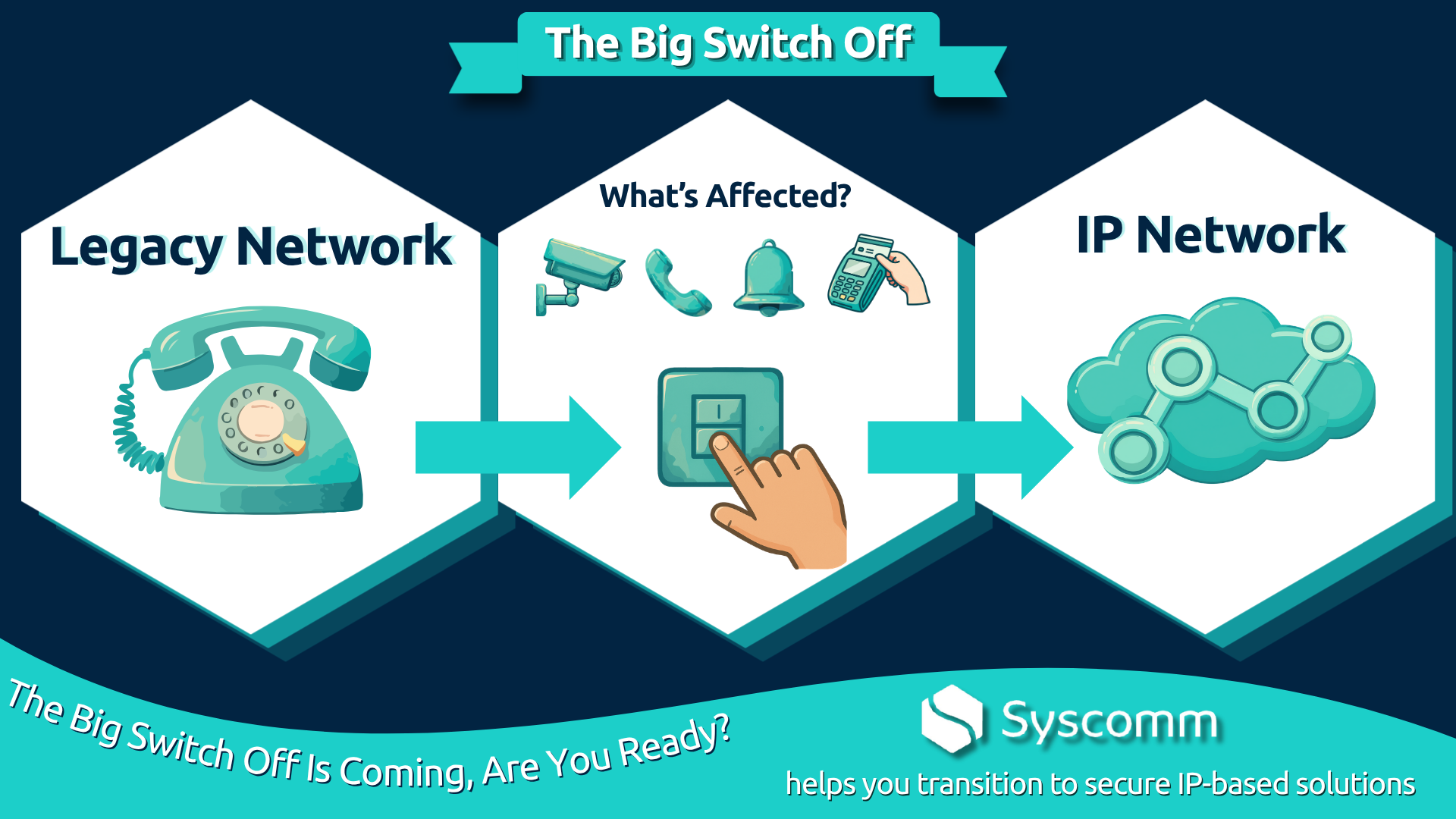
The UK’s traditional phone network is approaching a major milestone and for many organisations, the impact will be far-reaching. By January 2027,
the Public Switched Telephone Network (PSTN) will be permanently switched off, marking the end of analogue telephony and a full transition to digital, IP-based services.
Why the PSTN Switch-Off Matters
For decades, PSTN has underpinned business communications across the UK. However, it was never designed to support the data-driven, always-connected environments that organisations now rely on. As technology has advanced, the limitations of analogue infrastructure have become increasingly clear. It is more costly to maintain, harder to scale, and lacks the flexibility needed to support modern ways of working.
The move to All-IP networks reflects a broader shift towards faster, more reliable, and more adaptable connectivity. Rather than simply supporting voice calls, modern networks are designed to handle everything from cloud applications to remote collaboration, making them essential for today’s digital landscape.
More Than Just Phones
While many organisations associate the switch-off with desk phones, the reality is far more complex. A wide range of systems still rely on traditional phone lines, often without businesses realising it. These can include security systems, CCTV, payment terminals, access control, and even critical infrastructure like lift emergency lines.
Because these services are often embedded into day-to-day operations, overlooking them can lead to unexpected disruption. Identifying where PSTN is still in use is a crucial first step in preparing for the transition.
The Risk of Waiting
Although the final deadline is set for 2027, the transition is already underway. The introduction of a “stop sell” on legacy PSTN and ISDN services means organisations can no longer purchase or significantly modify these systems. As providers continue to phase out support, businesses that delay action may begin to experience rising costs, reduced reliability, and compatibility challenges with newer technologies.
Waiting too long can also compress timelines, making the migration more complex and potentially more disruptive. Early planning gives organisations greater control and flexibility in how they approach the transition.
The Opportunity: Moving to IP-Based Solutions
While the switch-off may feel like a challenge, it also presents a valuable opportunity to modernise your infrastructure. Moving to IP-based solutions enables greater flexibility, improved scalability, and enhanced performance across your organisation.
These technologies support hybrid and remote working environments, integrate seamlessly with cloud platforms, and provide a foundation for future innovation. Rather than simply replacing legacy systems, organisations can use this transition to build a more resilient and future-ready network.
How Syscomm Can Help
At Syscomm, we understand that moving away from PSTN is not always straightforward. Many organisations operate in complex environments where legacy systems are deeply integrated into daily operations. That’s why we take a consultative approach, working closely with you to identify dependencies, assess risks, and design a tailored migration plan.
From initial audits through to implementation, we help ensure your transition to IP-based services is smooth, secure, and aligned with your wider IT strategy.
Don’t Wait for the Deadline
The PSTN switch-off may still seem some way off, but the reality is that it’s already in motion. Organisations that act early will be better positioned to avoid disruption, manage costs, and take full advantage of modern connectivity.
If you’re unsure how the switch-off will impact your organisation, or want to explore IP-based alternatives, Syscomm is here to help you make the transition with confidence,
get in touch!